
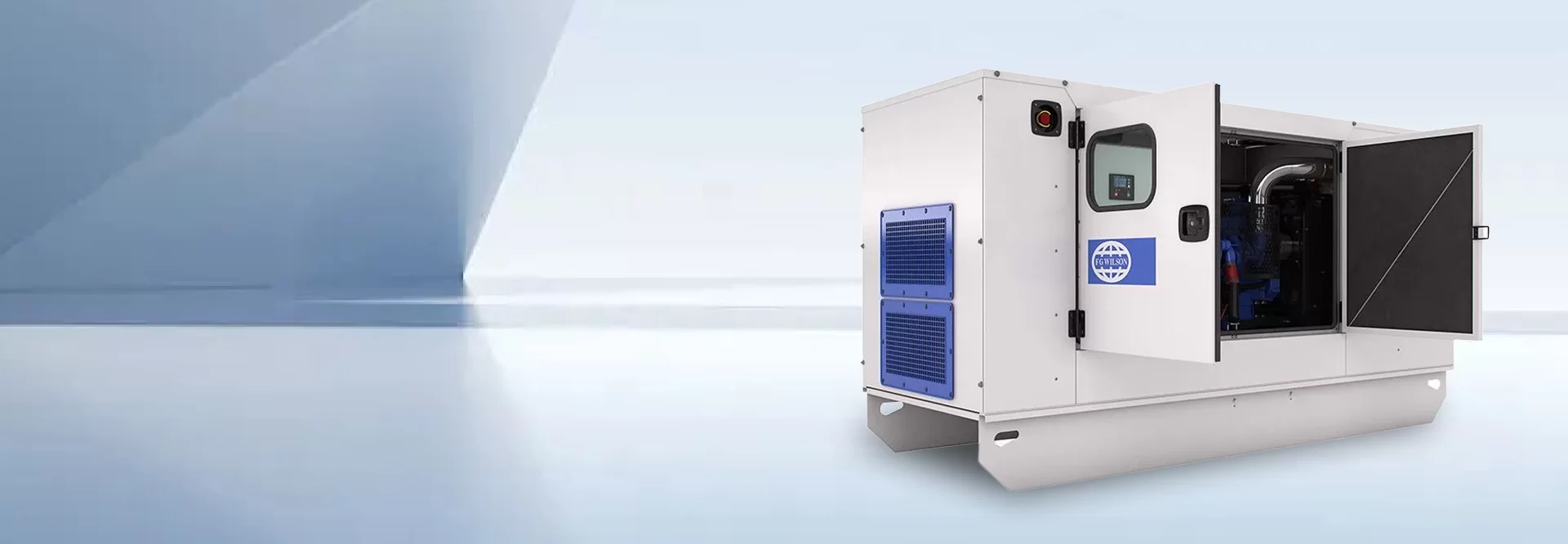
High Performance 40kva generator price Supplier for Industry
Securing a consistent energy supply is a critical operational requirement for modern industrial and commercial enterprises. For those evaluating the 40kva generator price Supplier options, the focus often extends beyond the initial capital expenditure to the total cost of ownership and long-term reliability. A 40kVA unit serves as a versatile mid-range power solution, capable of supporting essential server loads, medical equipment, or small-scale manufacturing lines during grid failures.
Dianbida Power Equipment specializes in engineering high-performance diesel gensets that bridge the gap between portable power and heavy industrial stations. By integrating advanced fuel injection systems and robust acoustic enclosures, our solutions ensure that critical infrastructure remains online without compromising urban noise regulations. Whether you are managing a remote construction site or a metropolitan data hub, understanding the technical nuances of power density and fuel efficiency is key to selecting a system that optimizes both performance and budget.

Critical Power Engineering and the Role of Mid-Range Diesel Generators
In the broader context of the diesel engine and accessories manufacturing industry, a 40kVA system is designed for stability and rapid response. Unlike smaller residential units, these industrial-grade machines are built to handle "step-loads"—sudden spikes in electricity demand that occur when heavy machinery or HVAC systems kick in. The core of these systems relies on a precision-engineered internal combustion engine paired with a high-efficiency alternator to maintain a steady voltage and frequency output.
For procurement managers, the value of a 40kva generator price Supplier is measured by the unit's Mean Time Between Failures (MTBF). A superior system utilizes heavy-gauge steel canopies and marine-grade anti-corrosion coatings to protect the internal components from humidity, dust, and extreme temperatures. This engineering focus ensures that the asset remains viable for decades, reducing the frequency of costly replacements and maximizing the return on investment for the facility operator.
- Voltage Stability: Advanced digital controllers prevent surges that could damage sensitive electronics.
- Fuel Economy: Optimized combustion cycles reduce operational expenditure (OPEX) and carbon footprints.
- Acoustic Management: Silent canopy designs allow for installation in residential or commercial zones.

Strategic Application Scenarios: From Data Centers to Remote Sites
The deployment of power solutions varies significantly by geography and industry. In regions like Africa or Southeast Asia, where national grids are prone to instability, diesel generators transition from "backup" to "prime" power sources. For instance, in hyperscale data centers, a 40kVA to 200kVA range is often utilized for specific critical sub-systems to ensure zero downtime, preventing massive data loss and network interruptions.
In the Middle Eastern construction sector, the challenge is environmental. Equipment must operate in extreme heat and severe sandstorms. This requires specialized modifications, such as oversized cooling blocks and heavy-duty air filtration systems. By employing intelligent parallel operation, multiple units can be synchronized to distribute variable loads dynamically, which prevents any single engine from overworking and significantly lowers overall fuel consumption.
Agricultural applications, particularly in South Asia, utilize these systems for high-volume pumping and climate control in aquaculture. Here, the priority shifts to ease of maintenance and durability. Providing multilingual technical documentation and digital operator training ensures that local staff can maintain the equipment, thereby securing crop yields and livestock survivability in off-grid environments.
Evaluating Supplier Capabilities and Customization Logic
Selecting a power partner requires a deep dive into their manufacturing agility. An expert OEM/ODM factory does not just sell a product; they provide a turnkey solution. This includes the ability to customize control panels, integrate Automatic Mains Failure (AMF) systems for millisecond-level power transfer, and design bespoke enclosures that meet specific site dimensions or noise ordinances.
Quality control is the cornerstone of trust in B2B procurement. Rigorous testing—including load bank testing at 25%, 50%, 75%, and 110% capacity—ensures that the unit will perform as promised under real-world stress. Furthermore, compliance with international standards such as CE Certification is non-negotiable for global deployment, as it guarantees adherence to safety, health, and environmental protection requirements, facilitating frictionless import and customs clearance.
Beyond the hardware, the value lies in the support ecosystem. Remote telemetry and predictive diagnostics allow facility managers to monitor fluid levels and engine health globally. This shift from reactive to predictive maintenance reduces unplanned downtime, which is often the most expensive part of owning an industrial power system.
Industrial Power Solution Selection Matrix
| Application Type | Priority Metric | Recommended Feature | Operational Impact |
|---|---|---|---|
| Data Center / Medical | Response Speed | AMF Control Panel | Zero-loss continuity |
| Remote Construction | Environmental Resistance | Heavy-duty Filtration | High uptime in dust |
| Commercial Agriculture | Maintenance Cost | High MTBF Design | Reduced OPEX |
| Island Resorts | Energy Integration | Hybrid Solar-Diesel | Lower fuel logistics |
| Industrial Manufacturing | Load Stability | Parallel Synchronization | Scalable power growth |
Optimizing the Procurement Process for Bulk Energy Assets
For large-scale distributors and project contractors, procurement logic centers on the balance between lead times and customization. A robust supply chain allows for the rapid dispatch of standard configurations while maintaining the flexibility to handle customized OEM batches. Understanding the lead time—typically 7 to 10 days for manufacturing and 20 to 60 days for global maritime freight—is essential for project scheduling.
When negotiating wholesale pricing, buyers should look for "total value" rather than the lowest sticker price. This includes evaluating the quality of the alternator, the efficiency of the electronic fuel injection, and the thickness of the steel canopy. A cheaper unit often results in higher fuel consumption and more frequent repairs, which quickly erodes any initial savings. Investing in high-grade components ensures asset protection and long-term operational stability.
Future Trends in Industrial Power Generation
The industry is moving toward "intelligent power," where generators are no longer isolated machines but nodes in a smart microgrid. The integration of IoT-enabled sensors allows for real-time diagnostics and automated load shedding, ensuring that the most critical loads are prioritized during a power crisis. We are seeing a significant rise in hybrid architectures, where diesel power is combined with solar PV arrays to reduce carbon footprints and lower diesel dependence.
Furthermore, emissions standards are becoming more stringent globally. The next generation of diesel generators focuses on advanced exhaust treatment and leaner combustion technologies. For the global buyer, this means selecting a supplier who not only meets current CE and ISO standards but is proactively innovating to meet the environmental regulations of 2030 and beyond.
Common Inquiries Regarding Industrial Power Procurement
What are the primary B2B applications for your diesel generator systems?
Our systems are strategically deployed across diverse sectors, including hyperscale data centers, medical facilities, telecommunications hubs, mining operations, and remote EPC construction sites. We provide both prime power for off-grid locations and critical backup for commercial infrastructure.
What is the typical production lead time for bulk or customized orders?
Standard configurations are often kept in stock for immediate dispatch. For customized OEM specifications, our agile production lines can typically process batches of under 100 units within a 7-10 day manufacturing window, depending on the complexity of the requirements.
How is global delivery handled and what are the estimated timelines?
Following payment and production, units are shipped via maritime freight. Global delivery times generally range between 20 to 60 days, depending strictly on the shipping route, the designated arrival port, and current maritime schedules.
What is the Minimum Order Quantity (MOQ) for wholesale procurement?
To accommodate various project scales, our MOQ is 1 set. However, we offer highly competitive wholesale pricing structures for large-scale procurement and long-term distributor agreements.
Can these units be integrated with renewable energy sources?
Yes, we engineer isolated microgrid architectures that synchronize our generators with commercial solar PV arrays. In this hybrid matrix, the generators dynamically auto-start during low solar yield or peak demand spikes to ensure uninterrupted power.
What certifications do the generators hold for international import?
Every unit adheres to stringent international safety and emission standards, including CE Certification, which ensures compliance with European safety, health, and environmental protection requirements for frictionless global deployment.
Technical Industry References
- Principles of Electric Generator Operation
- ISO Standards for Industrial Equipment
- EU CE Marking Requirements
- International Energy Agency - Power Generation Trends
Finding the right balance between initial cost and operational reliability is the hallmark of a successful power procurement strategy. Whether you require a standard backup unit or a deeply customized hybrid system, partnering with a manufacturer that understands the engineering challenges of your specific environment is essential. Contact our technical team today for a comprehensive consultation and a tailored wholesale quote.
Related Articles


